
6 min read
WEEE Categories: The UK Categories Explained
What each UK WEEE category covers, how to choose the right one, and why it matters for your data returns.
Read more
November 9, 2026
Every rule UK battery producers must follow on marking: symbol sizes, chemical symbols, capacity labels and built in batteries.
Marking is the part of battery compliance your customers actually see. The crossed out wheelie bin tells people not to put a battery in general waste, and the other marks tell treatment sites what they are handling. A battery that is not marked correctly cannot lawfully be placed on the market, whichever compliance scheme you belong to.
In Great Britain, battery marking is set by the Batteries and Accumulators (Placing on the Market) Regulations 2008. They apply to anyone placing a battery on the market, including batteries supplied inside products. Capacity labels come from Commission Regulation (EU) No 1103/2010, which still applies in Great Britain through regulation 5A of the 2008 Regulations.
In Northern Ireland, the EU Batteries Regulation (EU) 2023/1542 applies under the Windsor Framework. We cover what that means further down.
Marking is separate from the Waste Batteries and Accumulators Regulations 2009, which set your registration, reporting and take back duties as a producer.
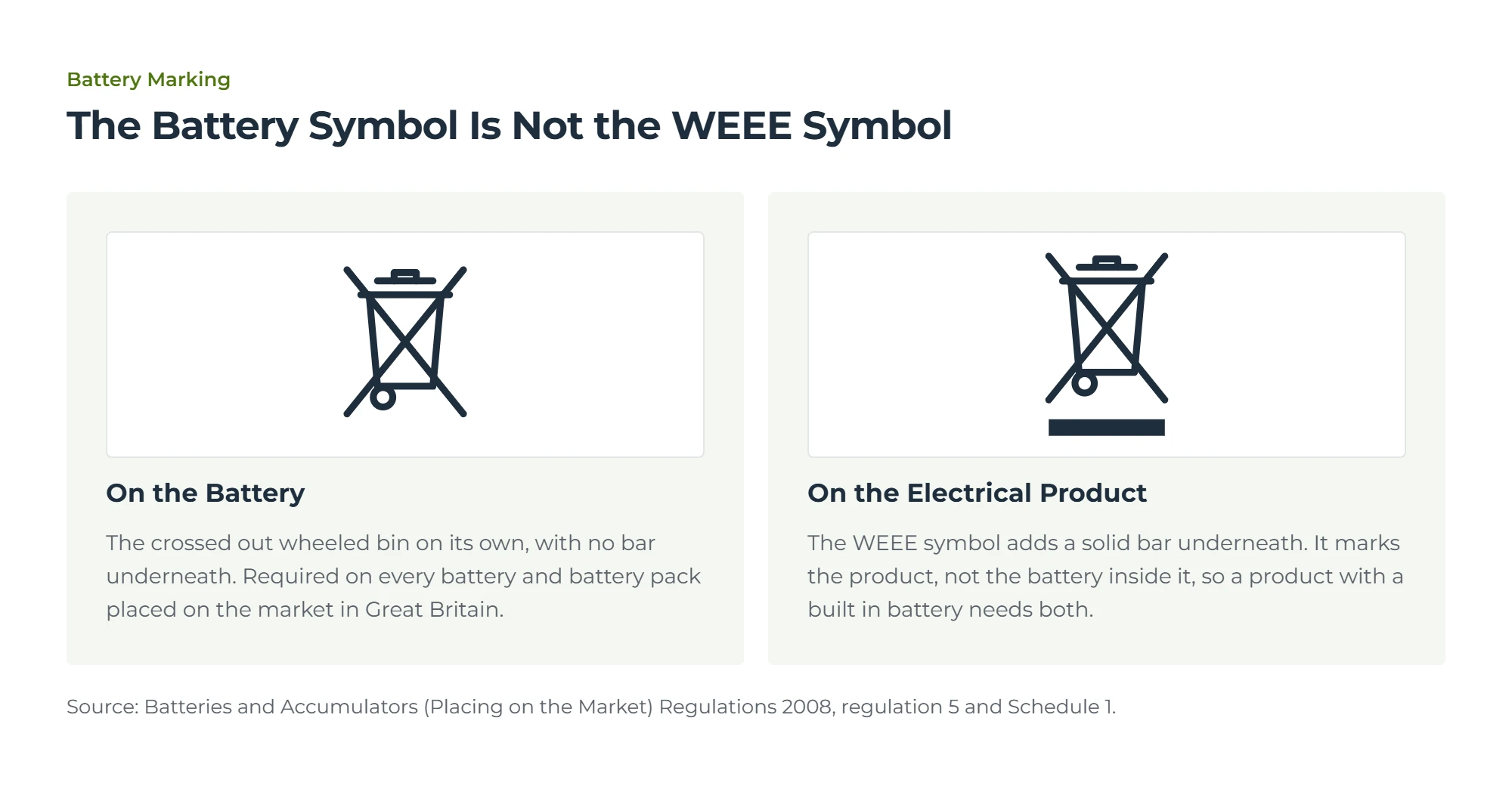
Every battery and battery pack placed on the market in Great Britain must carry the crossed out wheeled bin, whatever its chemistry, size or use. Portable, industrial and automotive batteries are all included. The symbol tells the end user that the battery must be collected separately and not thrown away with general waste.
The battery version of the symbol has no bar underneath. The bin with a solid bar beneath it is the WEEE symbol, and it belongs on the electrical product rather than on the battery.
As a worked example, a pack with a 60 x 45 mm largest face has an area of 2,700 mm², so the symbol must cover at least 81 mm², roughly 9 x 9 mm. An AA cell has a surface area of around 2,630 mm², which gives a minimum of about 6.3 x 6.3 mm. A 20 mm coin cell works out well under 0.5 x 0.5 cm, so its symbol goes on the packaging.
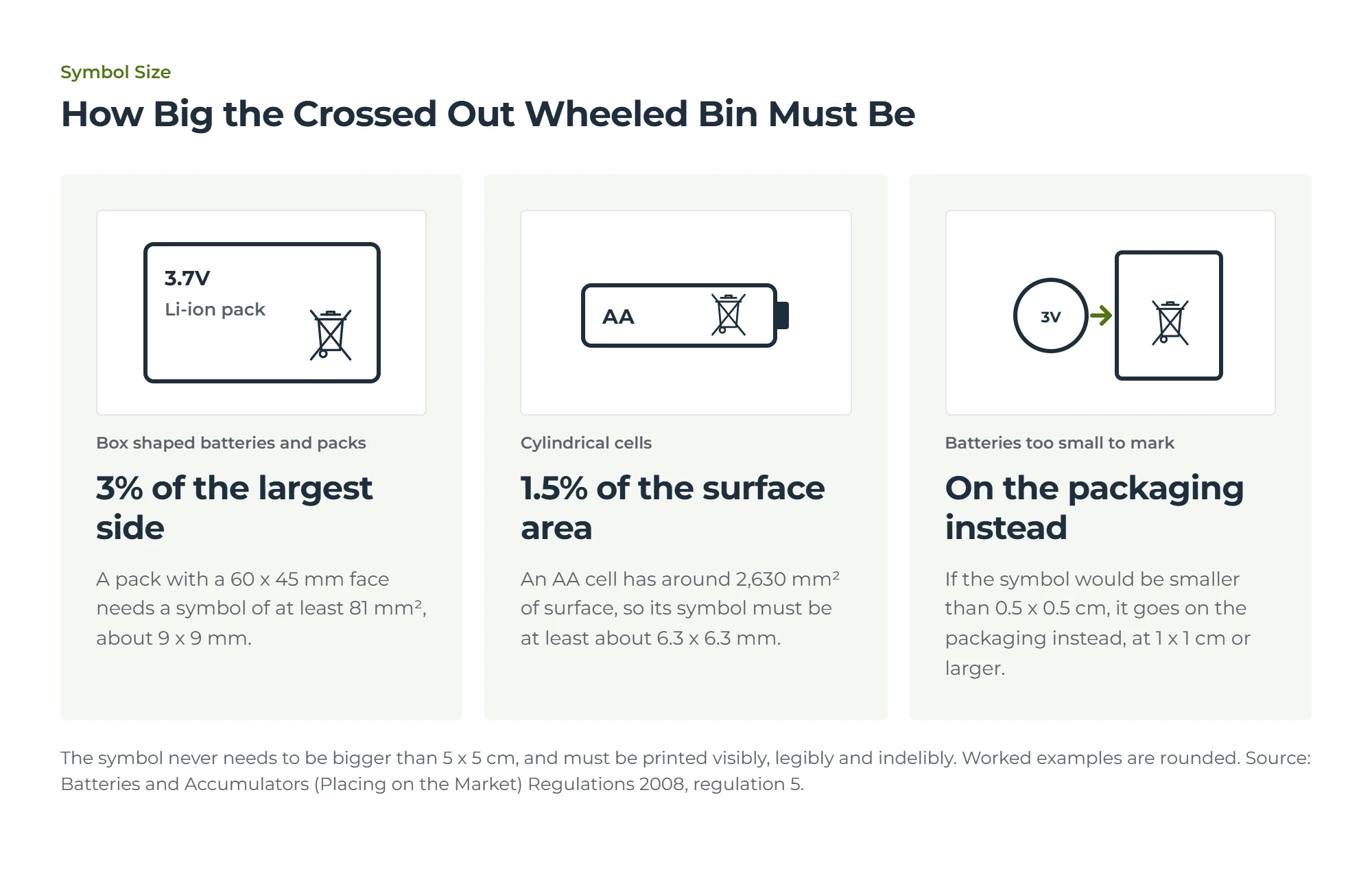
Whatever the size, the symbol must be printed visibly, legibly and indelibly. A label or ink that wears off in normal use is unlikely to meet that test.
Some batteries must also show a chemical symbol printed beneath the bin. It must cover at least a quarter of the size of the bin symbol, and be visible, legible and indelible like the bin itself.
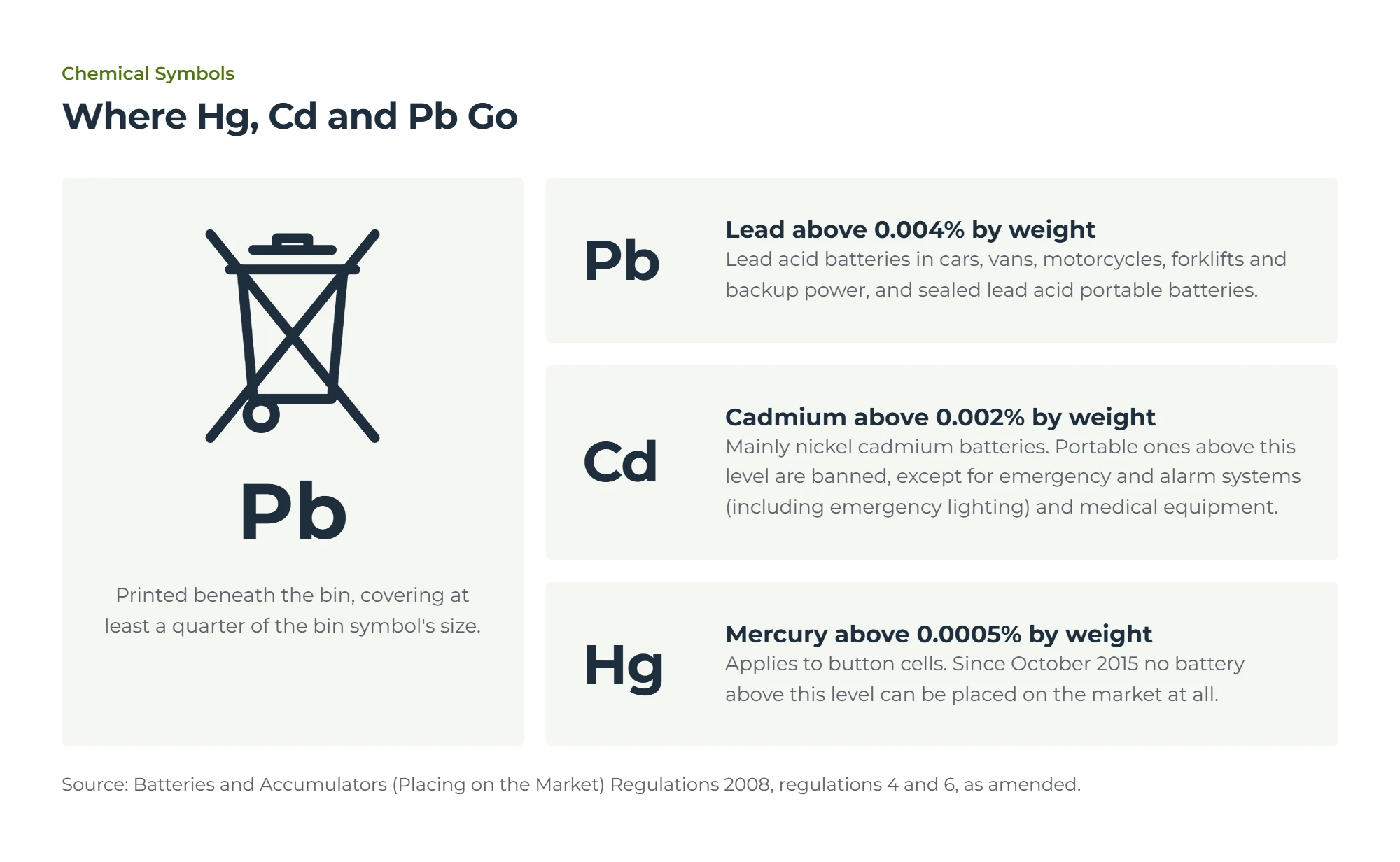
Ask your supplier for the battery's composition data so you know which symbols apply, and check the artwork shows them beneath the bin rather than beside it.
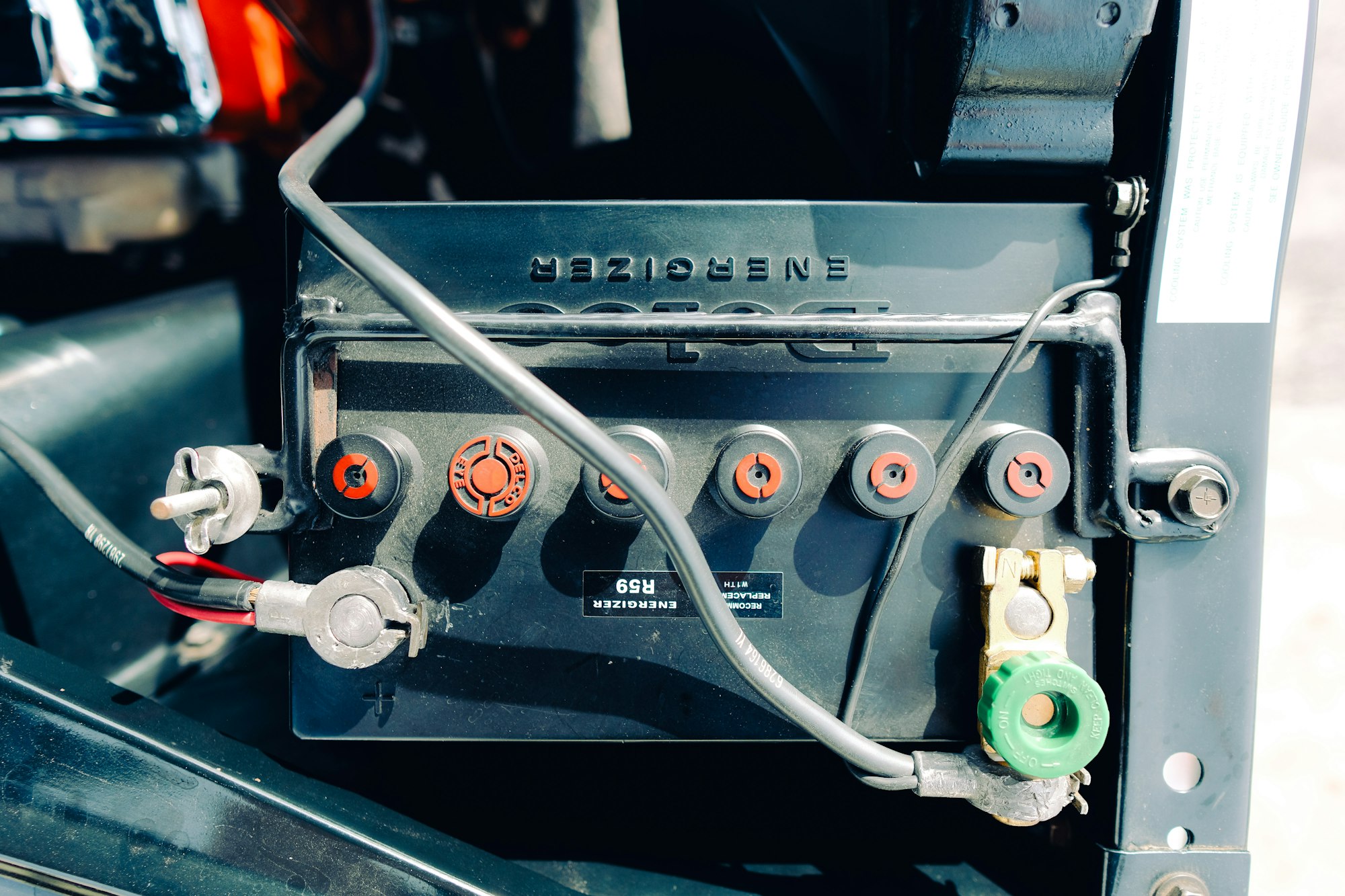
Rechargeable portable batteries and automotive starter batteries must also show their capacity, so buyers can compare like for like.
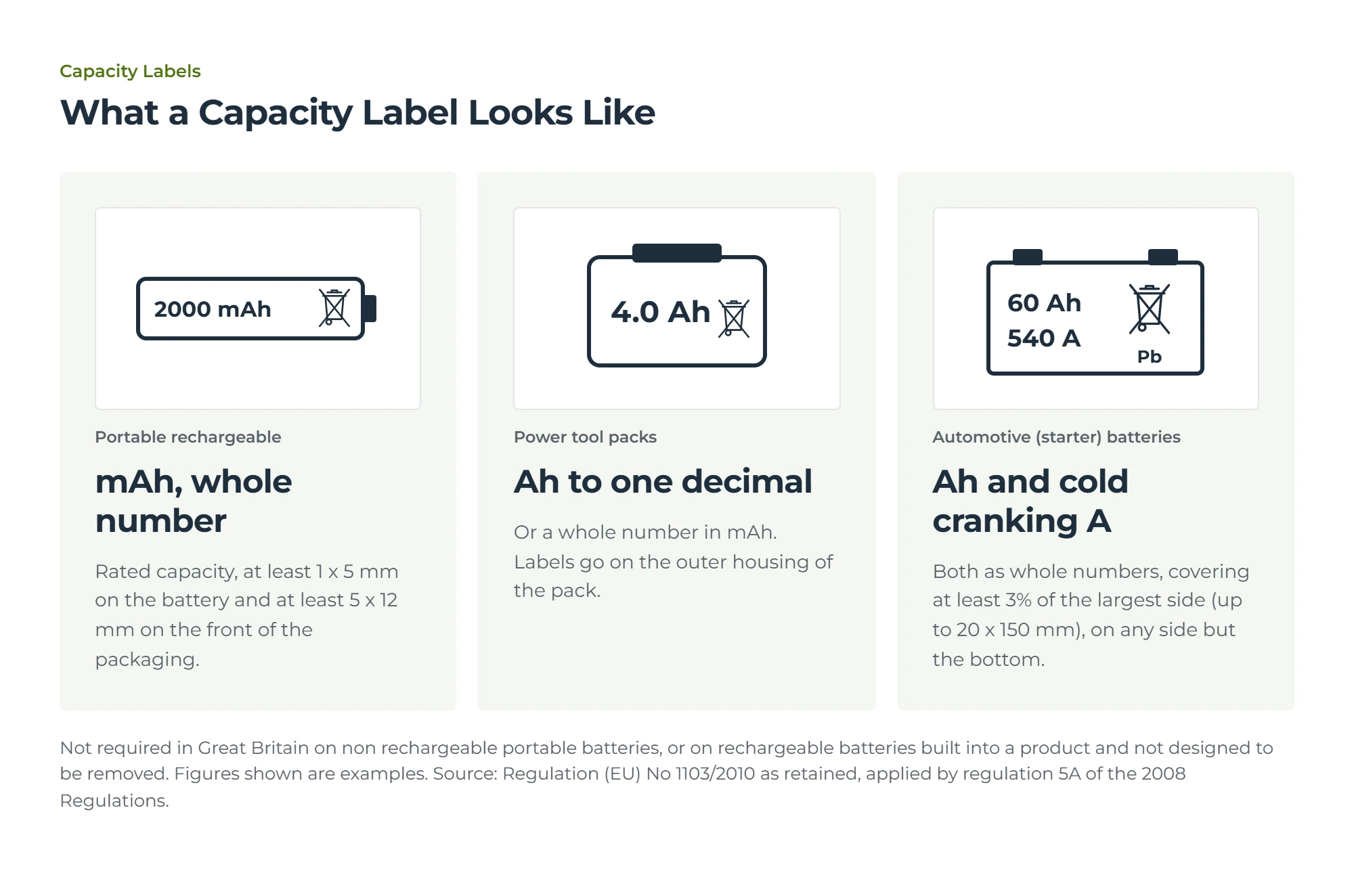
Capacity labels are not required in Great Britain on non rechargeable portable batteries, or on rechargeable portable batteries built into a product and not designed to be removed.
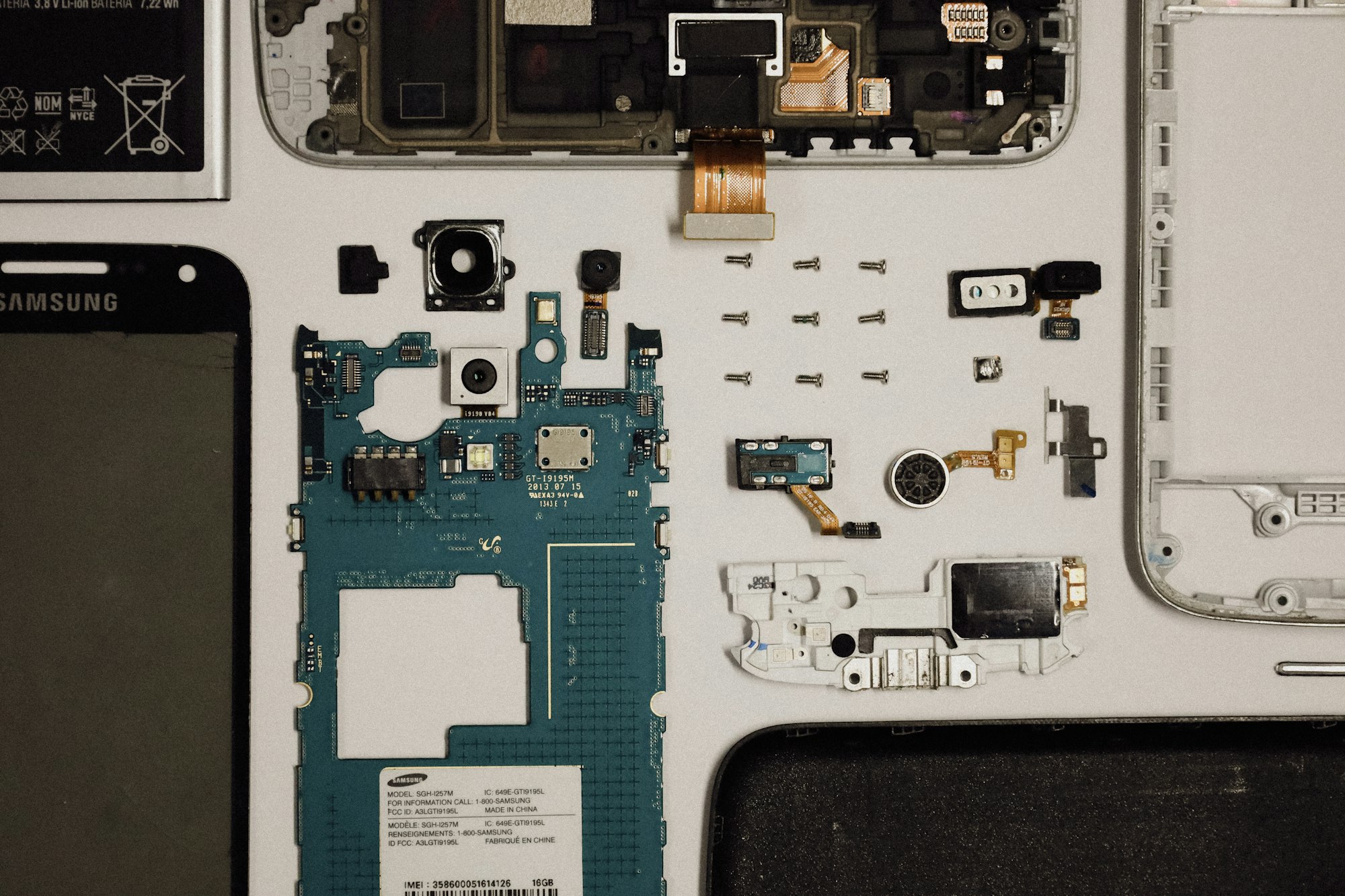
A battery inside a product still needs its own marking. The crossed out wheeled bin goes on the battery, and the WEEE symbol goes on the product, so a cordless drill, laptop or toy with a battery fitted carries both.
Products designed to take a battery must also let the waste battery be removed easily at end of life, either by the user or by an independent qualified professional. They must come with instructions on how to remove the battery safely and, where appropriate, say what type of battery is inside. The only exception is where the product needs a permanent connection to the battery for safety, performance, medical or data integrity reasons.
Under the Windsor Framework, the EU Batteries Regulation applies in Northern Ireland. The Batteries (Placing on the Market) (Northern Ireland) Regulations 2026 disapply the 2008 rules there and set out enforcement, although the 2008 capacity labelling and removability rules continue until their EU replacements take effect. If you supply batteries into Northern Ireland, plan for these changes:
GOV.UK describes these as the earliest possible dates, as some depend on supplementary EU legislation. Check the GOV.UK guidance on the EU Batteries Regulation in Northern Ireland before you change your artwork.
For now, the 2008 Regulations still set the marking rules in Great Britain. The government has said it will consult on a GB regime aligned with the EU Batteries Regulation. No GB changes are in force yet, so keep marking to the current rules and watch for the consultation.
The Office for Product Safety and Standards (OPSS) enforces the battery placing on the market rules on behalf of Defra. Marking is separate from your producer registration, so joining a compliance scheme does not cover a battery that is marked wrongly. Check marking with your supplier before stock arrives, as fixing it afterwards is far harder.
WERCS is an approved battery compliance scheme. We register you, report your battery data and meet your collection and recycling obligation, and we can talk you through your marking duties as part of a free desktop audit.

What each UK WEEE category covers, how to choose the right one, and why it matters for your data returns.

What WEEE evidence is, how compliance schemes use it to meet producer obligations, and why owning the treatment site matters.

Registration, reporting and take-back duties for producers of industrial batteries, including energy storage and EV batteries.