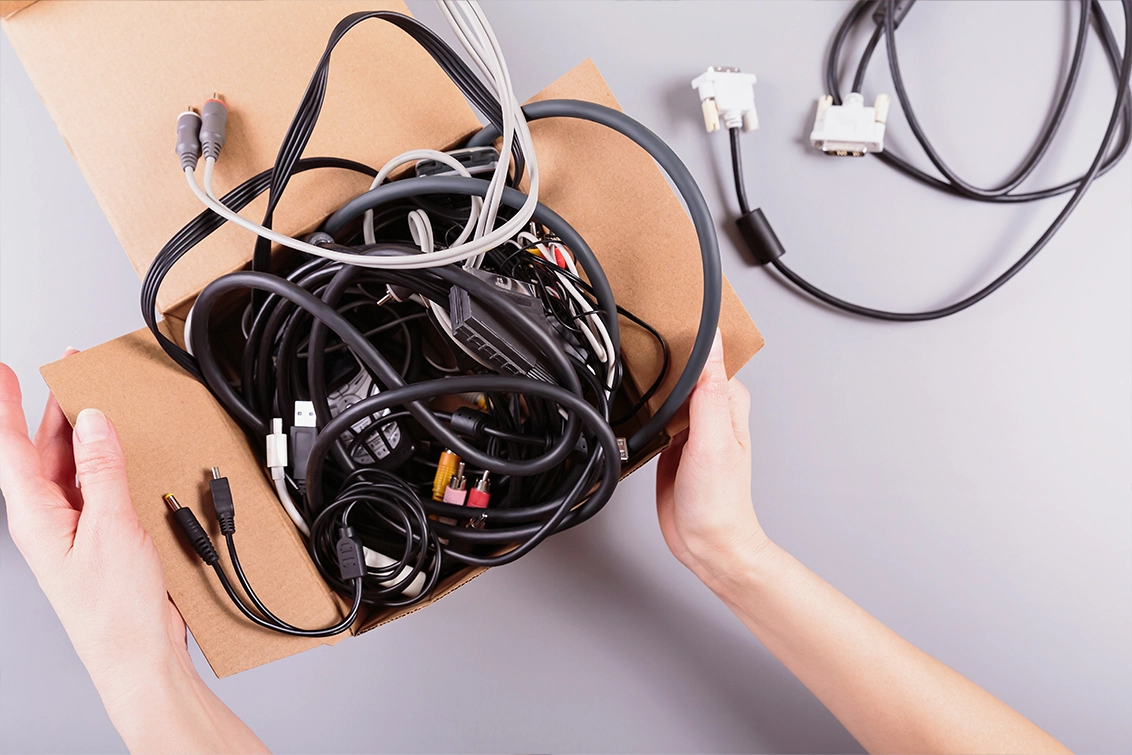
As electronic equipment reaches end-of-life faster than ever, businesses face mounting pressure to dispose of it responsibly. E-waste collection services provide the infrastructure businesses need to meet legal obligations, protect sensitive data, and contribute to environmental sustainability.
Electronic waste is the fastest-growing waste stream globally, with the UK producing over 1.6 million tonnes of WEEE annually. Unlike general waste, electronics contain valuable materials like gold, silver, and rare earth elements alongside hazardous substances including lead, mercury, and cadmium. Professional e-waste collection ensures electronics are properly processed, materials are recovered, and environmental harm is prevented.
Legal Requirements for E-Waste Collection in the UK
The WEEE Regulations 2013 establish comprehensive requirements for electronic waste management in the UK.
Producer Obligations
If your business manufactures, imports, or rebrands electronic equipment for sale in the UK, you are classified as a producer. Producers must register with an approved WEEE compliance scheme or the Environment Agency, finance the collection and treatment of WEEE equivalent to your market share, ensure products display the crossed-out wheelie bin symbol, and provide information to end users about proper disposal. Large producers placing 5 tonnes or more of EEE annually must join a compliance scheme.
Distributor Take-Back Requirements
Retailers and distributors selling electronic equipment have mandatory take-back obligations. Retailers with 400 square metres or more of sales area must offer free WEEE take-back when customers purchase equivalent new equipment. When delivering large EEE to customers, distributors must offer to collect equivalent WEEE free of charge. Retailers with electrical sales area of 400 square metres or more must accept small WEEE (25cm or less) free of charge without purchase requirement.
Business User Disposal Duties
All businesses generating WEEE have a duty of care to ensure it is disposed of legally. Use only authorised waste carriers for collection, obtain and retain waste transfer notes for 2+ years, ensure WEEE goes to appropriately permitted facilities, and separate WEEE from general waste. Non-compliance can result in unlimited fines.

Types of E-Waste Collection Services
E-waste collection services vary based on volume, location, and equipment type.
On-Site Collection
For businesses with significant quantities of WEEE, on-site collection offers maximum convenience. A licensed waste carrier visits your premises, collects electronics, and provides documentation. Best for office clearances and IT refresh projects, businesses generating regular WEEE volumes, large or heavy equipment, and when data security requires supervised collection.
Drop-Off Points
Designated collection points allow businesses to deliver WEEE at their convenience. Best for small businesses with occasional WEEE, individual items or small quantities, and businesses near collection facilities.
Scheduled Pickup Services
Regular scheduled collections work like commercial waste services, with containers provided and periodic pickups. Best for businesses generating consistent WEEE volumes, retail stores with customer take-back obligations, IT departments with ongoing equipment refresh, and multi-site organisations.
Choosing an E-Waste Collection Partner
Selecting the right collection partner is crucial for compliance, data security, and environmental responsibility.
AATF Approval Status
The most critical factor is whether your collector is an Approved Authorised Treatment Facility (AATF) or works with AATFs. Only AATFs are authorised to issue WEEE evidence notes proving compliant treatment. Using non-approved facilities means your WEEE may not be properly recycled, exposing your business to regulatory risk. Verify AATF status by checking the Environment Agency's public register, requesting evidence note copies, and confirming approval number and categories covered.
Data Security Certifications
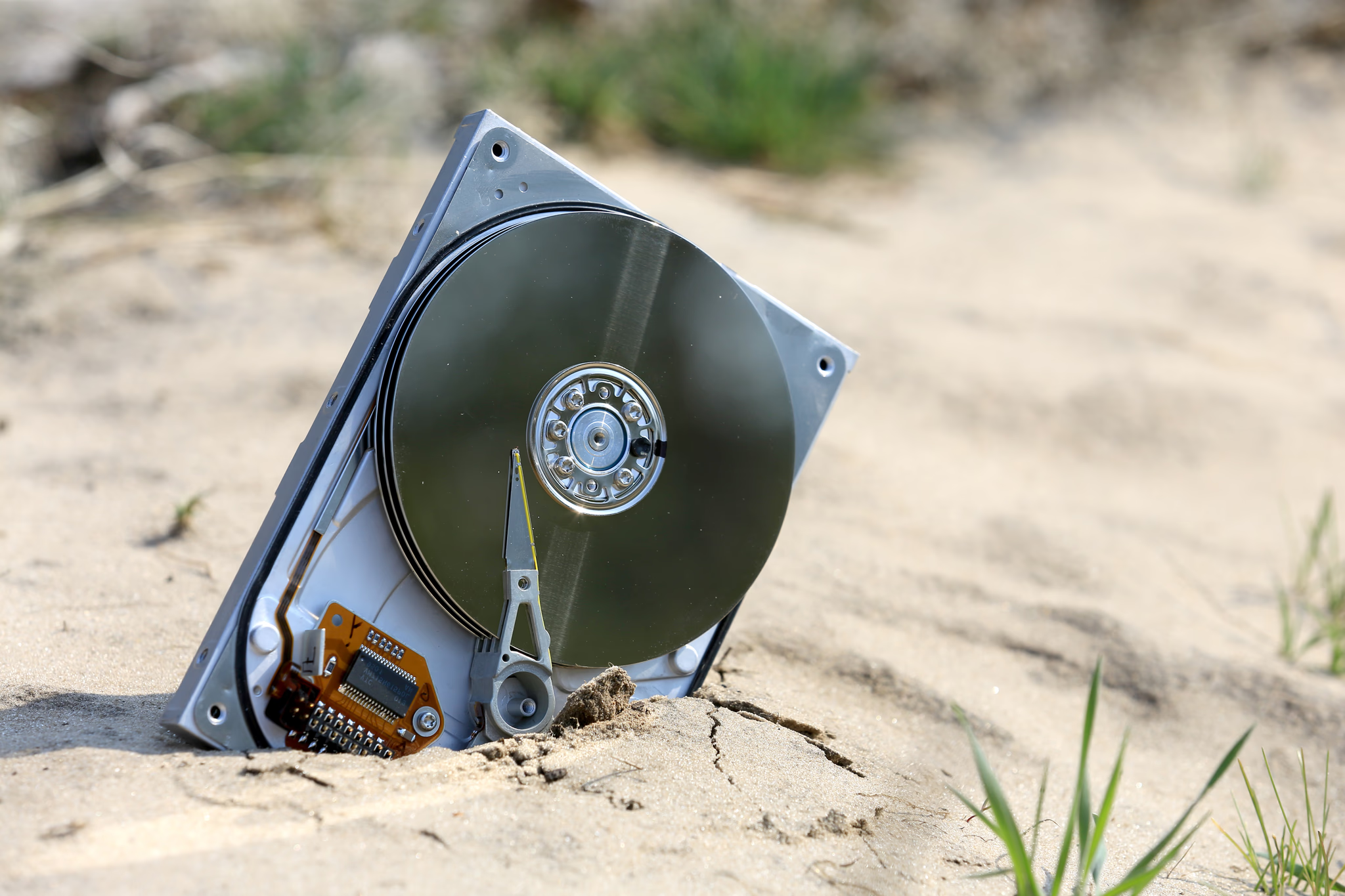
For IT equipment containing sensitive information, data security is paramount. Your collection partner should offer certified data destruction. Look for BS EN 15713 certification for secure data destruction, on-site hard drive shredding options, certificates of destruction for each asset, and GDPR-compliant processes.
Common E-Waste Collection Mistakes to Avoid
Using Unlicensed Collectors. The biggest mistake is using unlicensed waste carriers or non-AATF facilities, which can result in regulatory penalties, no evidence of compliant treatment, environmental harm, and data security breaches.
Inadequate Data Sanitisation. Use certified destruction methods for all storage media containing sensitive information.
Missing Documentation. Failing to obtain or retain waste transfer notes, recycling certificates, and data destruction certificates leaves you unable to prove compliance during audits. Keep organised records for minimum 2 years.
Delaying Collection. Stockpiling WEEE creates hazards, uses valuable space, and increases data security risks. Establish regular collection schedules rather than waiting for accumulation.
How WERCS Supports Business E-Waste Collection
WERCS provides comprehensive e-waste collection solutions tailored to business needs, combining compliance expertise with practical collection services.
Our integrated approach includes our in-house Waste Experts facility which is an Environment Agency approved AATF ensuring compliant treatment, flexible nationwide collection options including on-site pickup and scheduled services, certified hard drive destruction with full chain of custody documentation, expert guidance on WEEE obligations and regulatory changes, transparent pricing with no hidden fees, and complete waste transfer notes and recycling certificates.
Take Action on E-Waste Collection
Proper e-waste collection is essential for legal compliance, data security, and environmental responsibility. Assess your current WEEE volumes, verify your collector's credentials, implement secure data destruction, establish regular collection schedules, and maintain complete documentation.
Need expert e-waste collection services? Contact WERCS today for a free assessment and competitive quote. Our AATF facility and nationwide collection network ensure compliant, secure, and sustainable electronics disposal.
Blogs you may like
5 min read
How Waste Management Goes Hand in Hand with Compliance
In an era of rising environmental expectations and tighter regulatory frameworks, compliance is not just a box to tick, it's a cornerstone of sustainable operations.
6 min read
Data, Waste, and Risk: How Integrated Compliance Keeps Your Business Running Smoothly
In a business world driven by regulations and growing environmental responsibility, compliance is not just a department, it is a foundation.
5 min read
BESS Treatment: Explained
As battery energy storage systems become vital to the UK's low-carbon energy transition, their long-term management is gaining attention.
.webp)